"Africa and the Climate: an Opportunity to Adapt and thrive "






|
SeatDemocratic Republic of Congo |

|
climatechangeafricaopp@gmail.com |
"Africa and the Climate: an Opportunity to Adapt and thrive "
|
|
SeatDemocratic Republic of Congo |
|
climatechangeafricaopp@gmail.com |
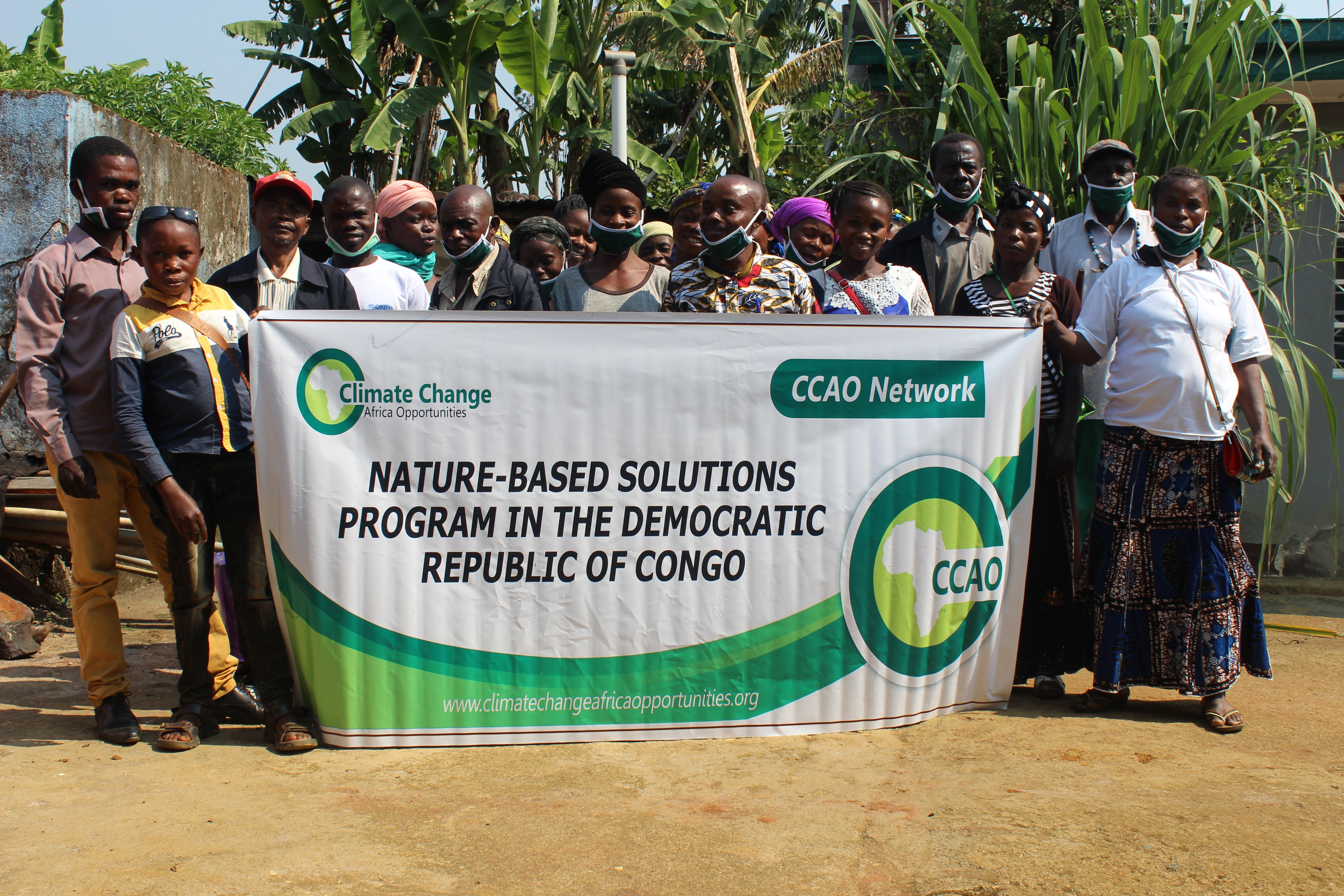
Nature-Based Solutions
Nature-Based Solutions are defined by IUCN as “actions to protect, manage and sustainably restore natural or modified ecosystems that respond to societal challenges in an efficient and adaptive manner”.
The NbS is to make nature an ally to adapt to the effects of climate change. Concretely it is to rely on the capital that nature offers us such as forests, mangroves, peat bogs, seagrass beds (etc.).
More than tools, NbS are answers!
The implementation of NbS brings many co-benefits, some of which are particularly crucial within the framework of this program implemented by Climate Change Africa Opportunities (CCAO) such as the reduction of gender inequalities and the inclusion of vulnerable people.
NbS are classified into the following categories:
1. Ecosystem restoration (eg ecological restoration, ecological engineering, and forest landscape restoration)
2. Infrastructure-related approaches (eg green infrastructure)
3. Ecosystem management approaches (eg integrated coastal zone management and integrated water resources management)
4. Ecosystem protection (for example, area-based conservation approaches, including management of protected areas)
Some examples of initiatives (supported by CCAO) based on NbS for adaptation to climate change in the Democratic Republic of Congo:
1. Restore and sustainably manage wetlands and rivers to maintain or increase fish stocks and fisheries-based livelihoods, reduce the risk of flooding, and provide recreational and tourism benefits;
2. Forest conservation to support food and energy security, local income, climate change adaptation and mitigation, and biodiversity;
3. Restore drylands to strengthen water security, local livelihoods and resilience to the effects of climate change;
4. Development and implementation of green infrastructure - Use of natural coastal infrastructure such as barrier islands, mangrove forests and coral reefs to protect shorelines and communities from coastal flooding and reduce the impacts of sea level rise;
5. Community management of fisheries and resources.
Climate Change Africa Opportunities (CCAO) builds on nature-based solutions as these are of increasing importance in the context of climate change as recommended by the Paris Agreement of the UNFCCC, Nationally Determined Contributions in the DRC, and biodiversity conservation policies [eg. Strategic Plan of the Convention on Biological Diversity 2011-2020, Aichi Targets). It is for this reason that Climate Change Africa Opportunities (CCAO) also combines ecosystem and biodiversity conservation approaches with sustainable socio-economic development as part of a comprehensive strategy aimed at helping indigenous and local populations to grow adapt to the shocks and risks associated with climate change in the Democratic Republic of Congo.
CCAO Team